

Preparing for Peak Season: Don’t Underestimate the Role of the Change Machine
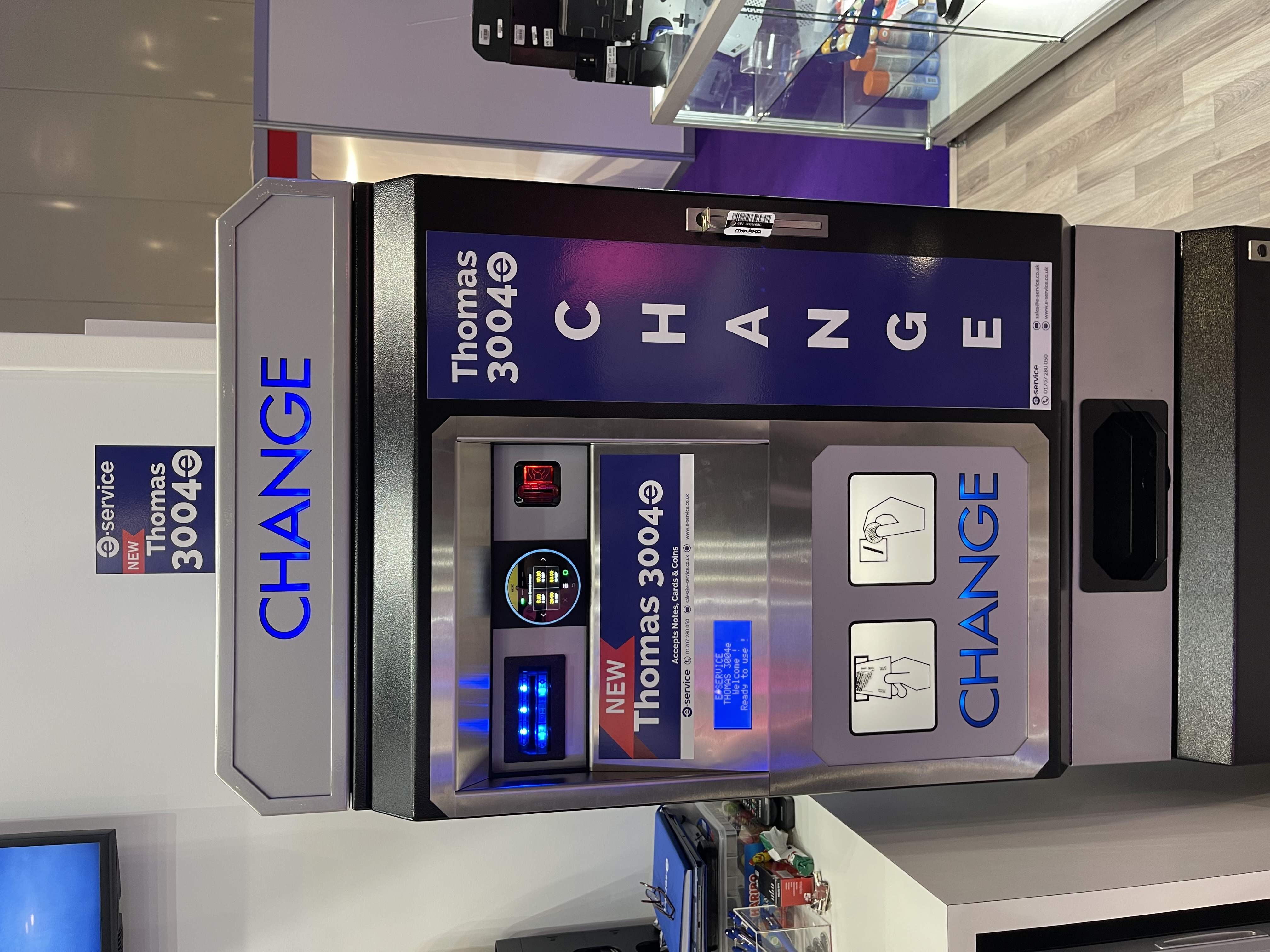
As the industry heads towards the busy Easter period, operators are once again turning their attention to the practicalities of peak trading - staffing, stock, service and, perhaps most critically, reliability on the floor.
Among the many moving parts in an arcade, family entertainment centre or leisure venue, it is often the simplest piece of equipment that carries the greatest workload: the change machine.
While new game launches and prize concepts tend to grab the headlines, it is the machine converting notes into coins, or into tokens and contactless credit, that underpins almost every transaction. When it works well, it goes unnoticed. When it doesn’t, queues build quickly and revenue can slow just as fast.
For this reason, many operators are reassessing how these units fit into their wider operations, viewing them less as standalone utilities and more as central infrastructure.
Over recent years, manufacturers such as E-Service have seen growing demand for machines that combine robustness with greater flexibility. Today’s models are typically fully programmable and configurable, allowing venues to adapt settings, payment options and messaging depending on their needs. Updated media and management panels have also opened the door to using machines as simple communication points on the floor, whether for promotions, player information or venue updates.
Across the Thomas range, the emphasis remains on reliability and suitability for different environments. Larger, high-capacity models such as the 3004e are commonly used in busy arcades and AGCs where continuous performance is essential, while mid-sized units like the 5000e continue to be favoured for their durability and straightforward operation especially supporting high-volume demand equipment such as 2p and 10p pushers. More compact machines in the 1000 Series offer a practical solution for smaller sites or secondary locations where space is limited but dependable change is still required.
Alongside traditional cash handling, operators are also increasingly looking for ways to reduce friction at the point of spend. Contactless payment options, token vending and integration with other on-site services mean the change machine is evolving into something closer to a small payments hub, supporting multiple parts of a venue rather than simply dispensing coins.
Another area gaining attention is lifecycle management. Historically, upgrading equipment often meant removing machines from site and sending them away for refurbishment; an approach that can be inconvenient during busy periods. To address this, E-Service offers advance replacement machine programmes, allowing a complete machine to be swapped in on delivery, minimising downtime and keeping sites operational.
It’s a small operational change, but one that reflects a broader trend: keeping essential equipment working without interruption has become just as important as introducing new attractions.
As footfall increases over Easter and into the summer, the dependable performance of these everyday machines becomes even more critical. In many ways, they remain the quiet workhorses of the industry — rarely the star of the show, but fundamental to keeping everything else moving.
5 February 2026
No comments have been posted yet.
Please sign in or join the network to post comments
Bacta to hold Extraordinary General Meeting in July
Bacta has confirmed that it will convene an Extraordinary General Meeting (EGM) on Thursday 16 July 2026 at 3pm to allow members to vote on a series...
When the Arcade is the Star: Learn How Mini Cube Prize World Earns Its Place at Flagship FECs!
The social entertainment sector is in full stride. Across the globe, a new breed of venue is redefining what a night out looks like –...
Reflex Gaming doubles the luck with Dublin Up Pots O' Gold
Reflex Gaming, the UK's largest independently owned omni-channel game supplier, is heading deep into an enchanted Irish forest with the launch of...
